Does Ozempic affect anesthesia for surgery?
Yes — GLP-1 drugs slow gastric emptying, raising aspiration risk under anesthesia. Most surgical societies now recommend pausing them before scheduled procedures.
Updated May 8, 2026 · 3 min read
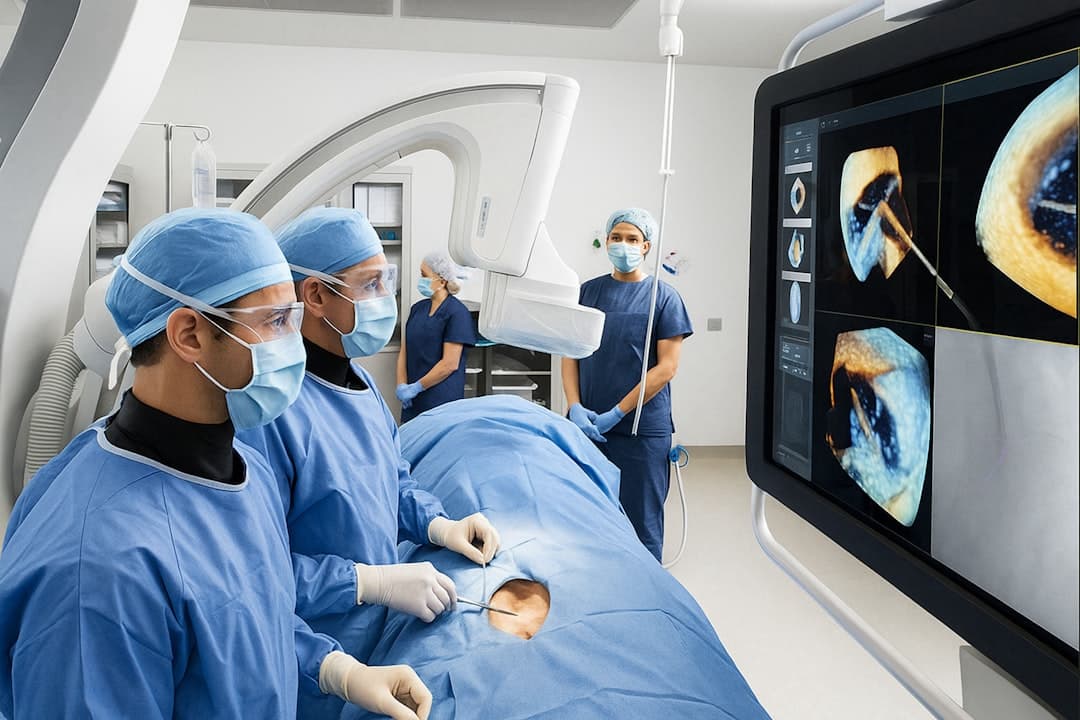
Yes. Ozempic and other GLP-1 medications slow gastric emptying, which means food can sit in your stomach much longer than the standard pre-op fasting window assumes. That increases the risk of pulmonary aspiration under anesthesia. Most major surgical and anesthesiology societies now recommend pausing GLP-1s before any planned procedure that involves general anesthesia or deep sedation.
Why this is a real concern
The standard pre-op fast — nothing to eat after midnight, clear liquids stopping a couple of hours before — was developed assuming normal gastric emptying. With a GLP-1 on board, that assumption breaks. Anesthesiologists have reported finding stomachs full of solid food in patients who fasted by the textbook for 8–12 hours. Aspirating that content into the lungs during induction can cause severe pneumonitis or death.
The risk is highest with general anesthesia, intermediate with deep sedation, and lower (but not zero) with light sedation or local anesthesia.
What the surgical societies recommend
Guidance has tightened over the last two years. The general framework now used by most anesthesiologists:
- Weekly GLP-1s (Ozempic, Wegovy, Mounjaro, Zepbound, compounded semaglutide/tirzepatide): Hold the dose for at least one week before the scheduled procedure. Some institutions extend this to two weeks for tirzepatide.
- Daily GLP-1s (Rybelsus, Saxenda, Victoza): Hold for at least the day of surgery; many hold 1–3 days before.
- Liquid-only diet for 24 hours before procedures, even with the hold, in higher-risk cases.
- Gastric ultrasound at induction in some centers to confirm an empty stomach before anesthesia is started.
These are general patterns, not universal rules. The specific instructions you should follow are the ones from the team performing your surgery, not from the internet. Patterns of guidance change as more data emerges.
What to tell your surgical team
Before any scheduled procedure, proactively disclose:
- The exact medication (brand or compounded peptide name)
- Your current dose
- The day of your last dose
- Whether you've had any dose changes recently
Don't assume the form you filled out captures it — many pre-op intake forms still don't ask about GLP-1s by name. If yours doesn't, write "Currently on [medication name], last dose [date]" in the medications field or tell the pre-op nurse directly.
For dental procedures, colonoscopies, and other "minor" procedures, this conversation still matters. Conscious sedation isn't risk-free with a slow-emptying stomach.
What to do if you forgot to stop
If your surgery is tomorrow and you took your dose this morning, tell the surgical team immediately — don't wait. Options they may consider:
- Postpone the procedure (the safest option for elective surgery)
- Switch to a longer fast with liquid-only or NPO for 24+ hours
- Use gastric ultrasound at induction to assess stomach contents
- Modify the anesthesia approach (regional or local where possible)
For emergency surgery, anesthesiologists assume the stomach is full and use rapid-sequence induction techniques designed to minimize aspiration risk. The team will manage it; your job is to disclose.
When you can resume after surgery
For elective surgery without complications, most clinicians have you resume your GLP-1 once you're tolerating food and liquids normally — typically within a few days for outpatient procedures, longer for major surgery. There's no benefit to rushing it back, and post-op nausea on top of GLP-1 side effects is rough.
Our missed-dose guide covers what to do after the gap. The short version: if you're more than 5 days past your normal dose, restart at your prior dose on your usual day rather than catching up.